Reflections on Roti in the Indo-Guyanese Community
By Ravena Pernanand
Project Background:
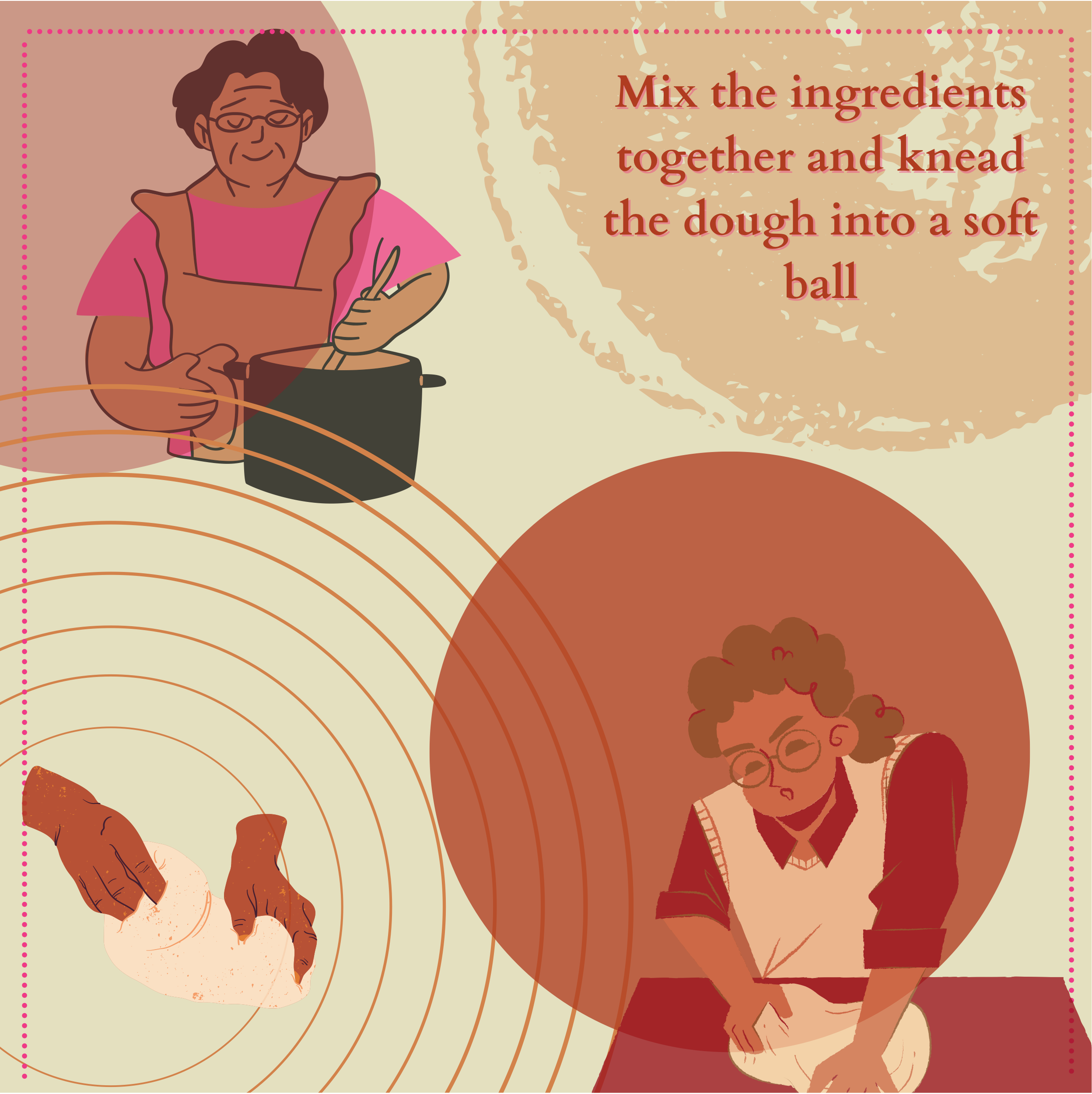
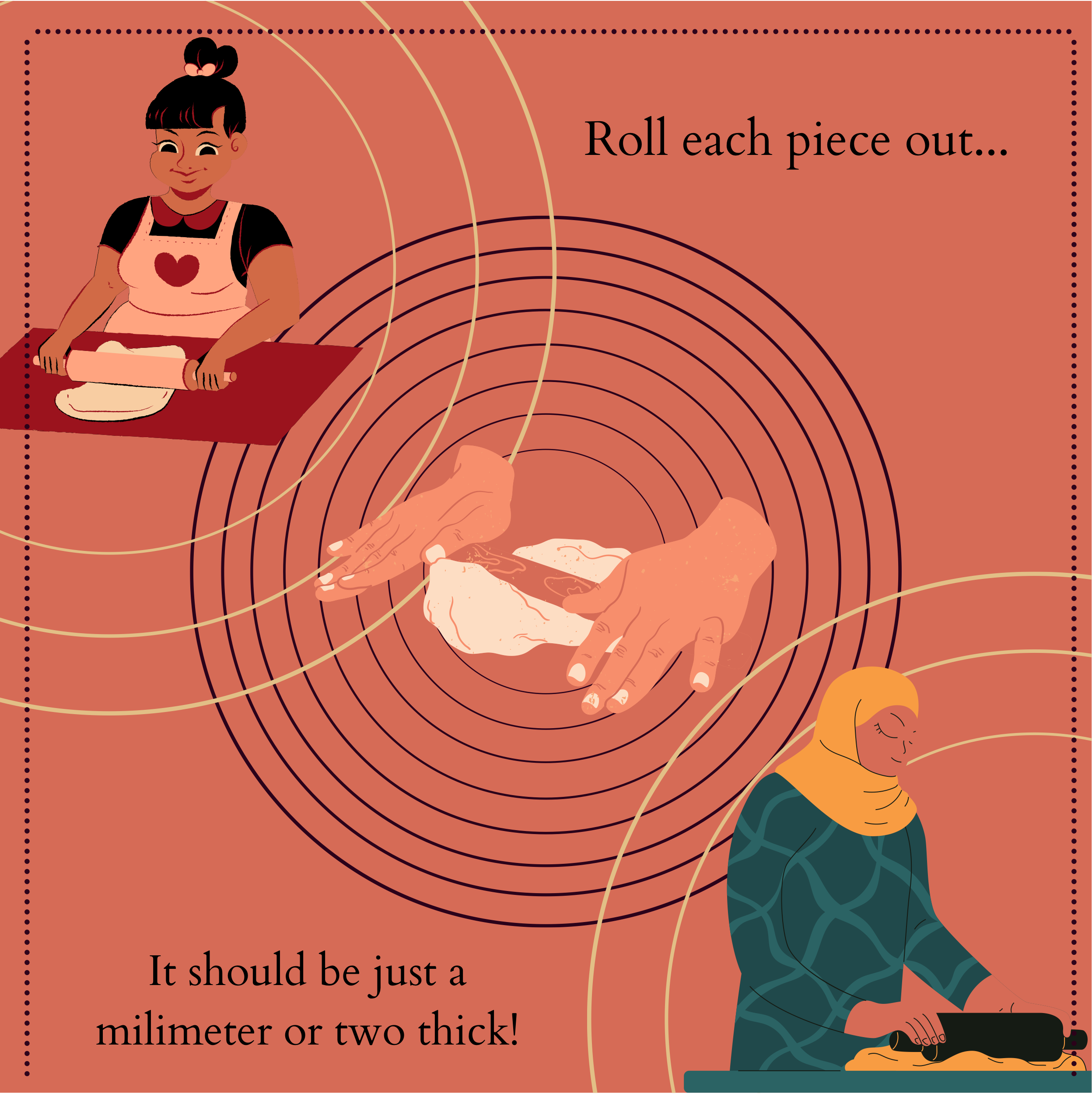
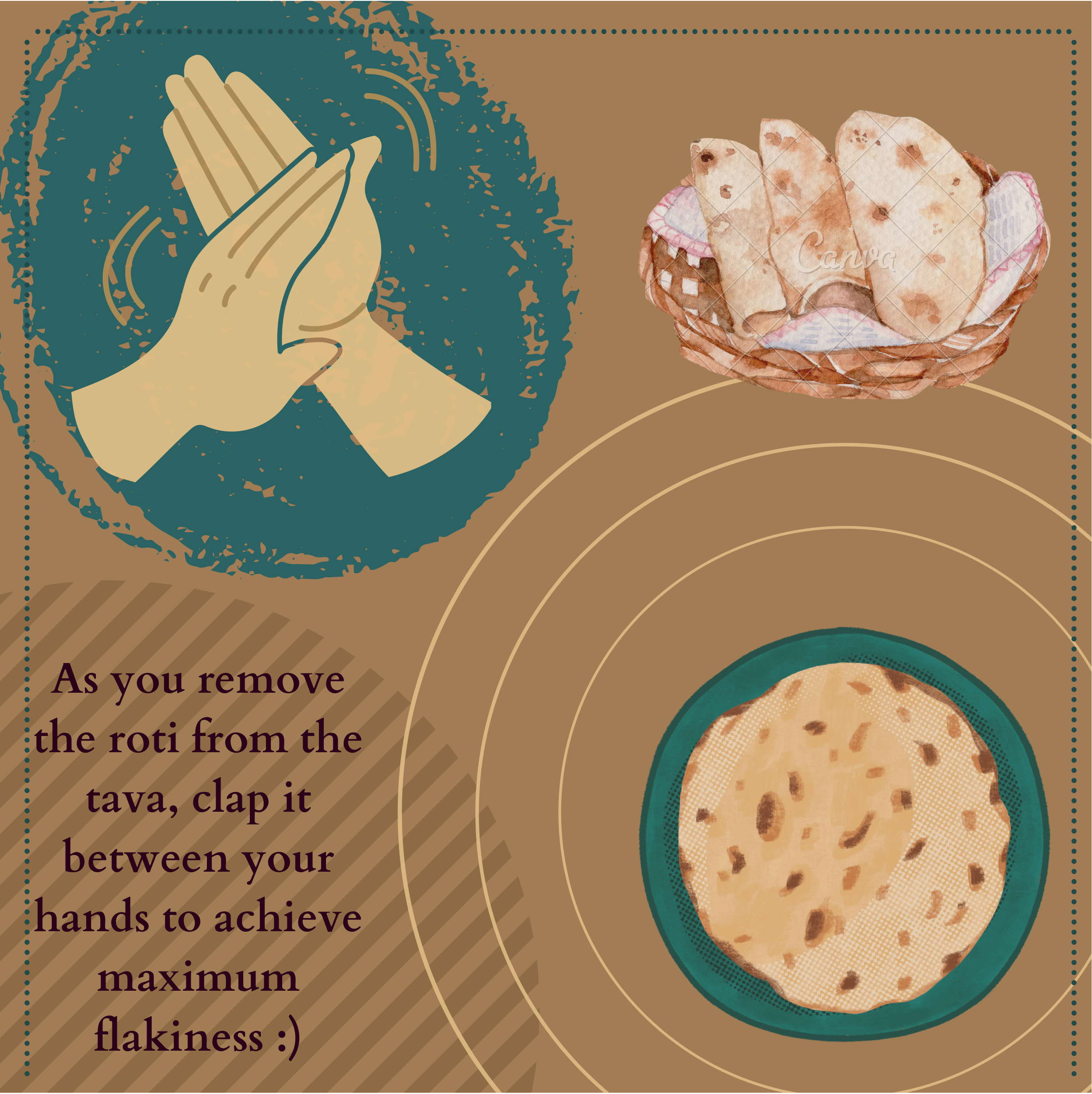
I look specifically at a group of women within my own community that have migrated to New York State from Guyana. In studying how roti is made, taught, and consumed among this community, I delve into the meaning that this act of community making holds and what messages are communicated through the process of making, and learning about, roti. Additionally, this project is an opportunity to highlight the voices of Indo-Guyanese migrants who have created community in New York, through food and other cultural practices.
Roti making serves as a familiar routine for Indo-Guyanese diasporic women in NY. The act of producing and consuming roti is also a form of gendered labor that holds implicit meanings about the woman’s place in the family and the expectations of Indo-Guyanese women among the larger community. Though the act of making roti, and the messages that accompany it, have changed and been diluted throughout the migratory process, roti still serves as a strong cultural symbol and practice for Indo-Guyanese diasporic women in the United States.




History:
The movement of East Indians to the Caribbean began in the mid 1800s when many people from East India were brought over as contractor indentured laborers, And currently about 40% of Guyana’s population is comprised of Indo Guyanese people, So people with Indian ancestry and they are currently the the largest ethnic group in Guyana. And migration to the Caribbean due to the impacts of colonialism and the unfamiliar natural resources and landscape altered the methods through which Indians continued their cultural practices. But these barriers did not lead to a complete erasure of Indian culture in the Caribbean. Instead, we see the emergence of altered foods that came about such as paratha roti or sada roti, different versions of of roti that are now culturally culturally known as Indo Guyanese dishes. And then emigration to to the United States among Guyanese migrants started in the 1960s.
Since 1965, NYC has become home to about 40,000 diaspora Indians of Guyanese ancestry. And many Guyanese immigrants centered in little Guyana, which serves as a little Guyana, is located in Queens, NY, and it serves as a cultural hub for a large immigrant community.

Audio Essay:
At the core of my project were the interviews that I conducted over the course of two weeks, conversations with Guyanese women in my life who had grown up perfecting the craft of roti making. What lies at the heart of this experience are the stories, and even the lack of stories, that I heard from the Guyanese women I spoke to.
I started with my mother, who I’d witnessed making roti since the beginning of time. I remember calling her on the phone and explaining to her that I was doing a project on roti making. This explanation was met with confusion. “What do I feel when I make roti?” she asked, repeating the question I’d posed to her. “I feel good?” Her answers sometimes came back to me in the form of a question. To her, this analysis of a mundane task felt odd. Her confusion about my questions was also an opportunity for me to reflect on what roti meant to this community of Guyanese women, it was an object that was symbolic of community and care, but it was also simply just food.

The Roti Project has gifted me with the experience of delving into the complexities of my own identity and personhood, my personal experiences with roti as a craft and symbol of community. More importantly, it opened up a door for me to revisit the past, hear from the women who raised me, and who raised women like me. – Ravena Pernanand
About Raveena
- Hamilton College ’23
- Major:
- What is he doing now:
- Why did he choose this topic?

FAQs
What is your process working in smaller projects?
Études offers comprehensive consulting, management, design, and research solutions. Our vision is to be at the forefront of architectural innovation, fostering a global community of architects and enthusiasts united by a passion for creating spaces. Every architectural endeavor is an opportunity to shape the future.
Who is behind Études?
Études offers comprehensive consulting, management, design, and research solutions. Our vision is to be at the forefront of architectural innovation, fostering a global community of architects and enthusiasts united by a passion for creating spaces. Every architectural endeavor is an opportunity to shape the future.
I’d like to get to meet fellow architects, how can I do that?
Études offers comprehensive consulting, management, design, and research solutions. Our vision is to be at the forefront of architectural innovation, fostering a global community of architects and enthusiasts united by a passion for creating spaces. Every architectural endeavor is an opportunity to shape the future.
Can I apply to be a part of the team or work as a contractor?
Études offers comprehensive consulting, management, design, and research solutions. Our vision is to be at the forefront of architectural innovation, fostering a global community of architects and enthusiasts united by a passion for creating spaces. Every architectural endeavor is an opportunity to shape the future.
 The Roti Collective