An Internet meme, or meme (/miːm/, MEEM), is a cultural item (such as an idea, behavior, or style) that spreads across the Internet, primarily through social media platforms.
The Roti Collective takes all cultural items connected to roti and roti-making as forms of cultural commentary that function as forms of storytelling that deepen how we understand roti’s history, gender, inheritance through a feminist lens
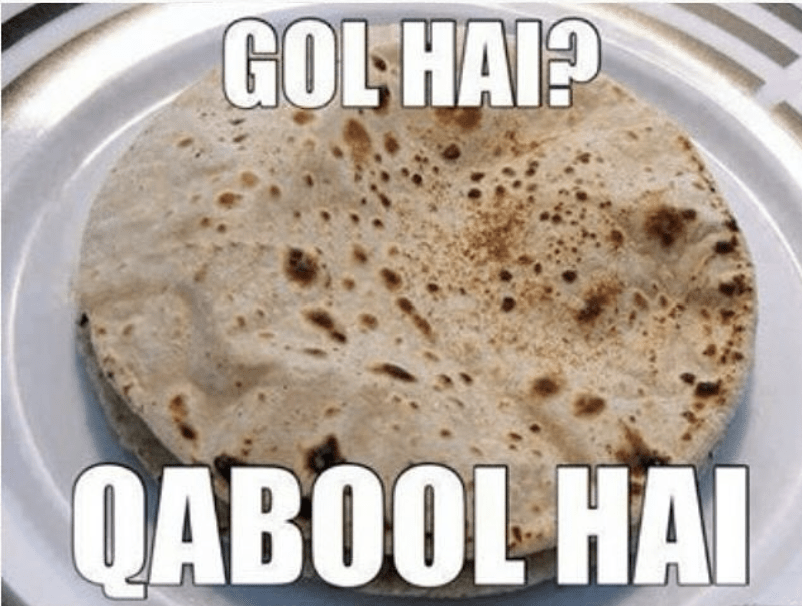
“I accept”
For South Asian Muslim communities, “qabool hai” is heard during marriage ceremonies when each person is asked if they accept the marriage, to which the response is “qabool hai” or “I accept.”
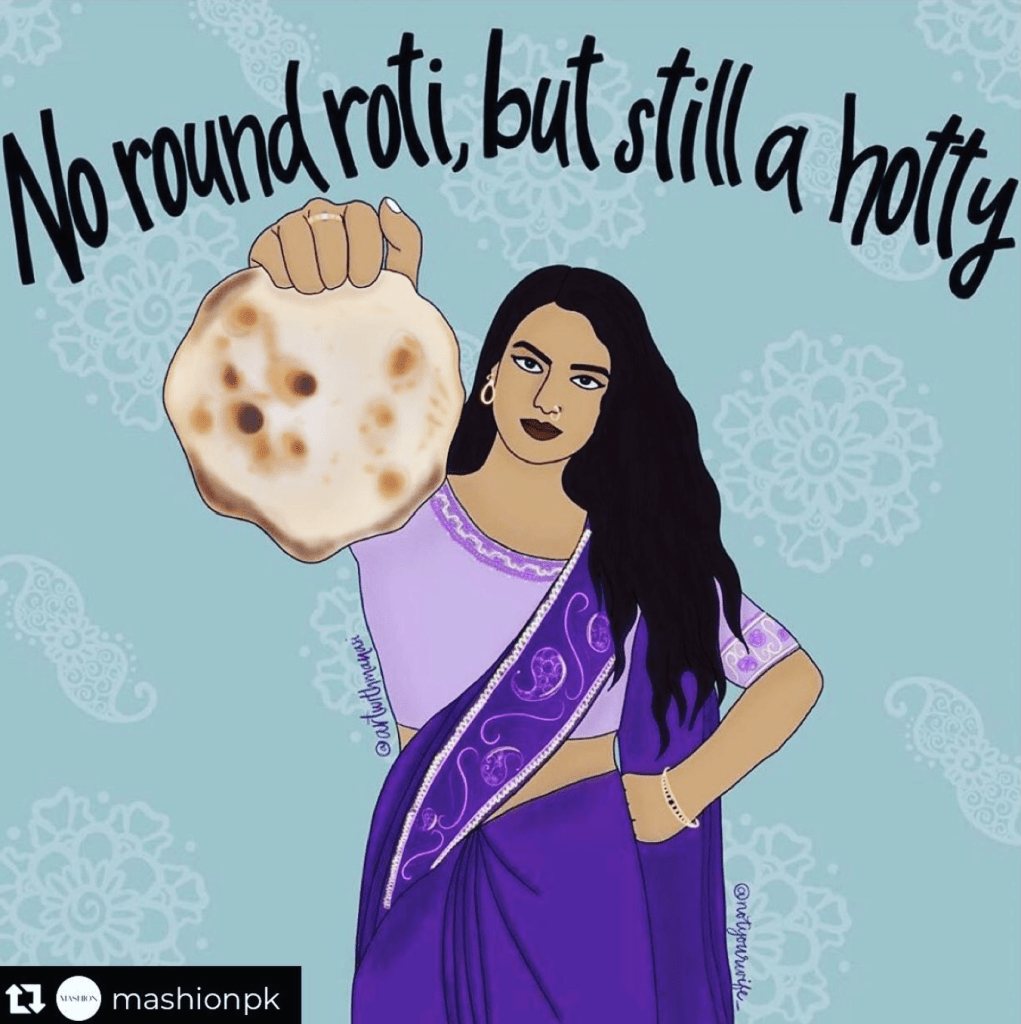
While very funny, this meme also asks us to reckon with the gendered reality of roti and roti making — a round roti is often a sign of a woman’s prowess in the kitchen, providing her to be a capable housewife, and thus worthy for marriage. In this case, the question is if the roti is round, then the marriage is accepted. Within a heterosexual couple, the meme implies the question is being asked of the woman.
Flipping rolls
This is an image of Bollywood actress Kareena Kapoor making roti for a promotion of her movie “Ki & Ka”, where they attempted to flip gender roles.
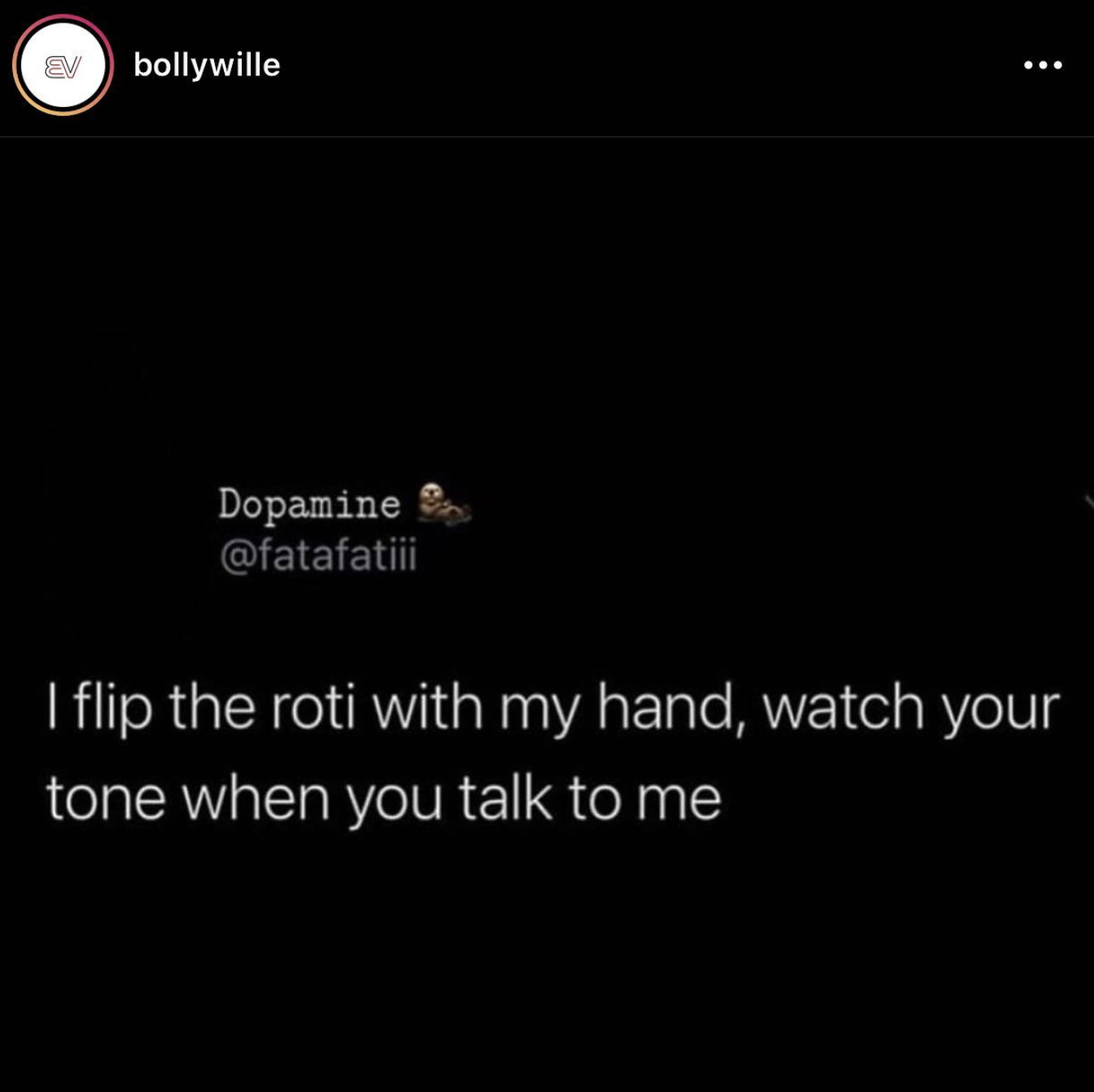
The process and education of roti-making can be a stronghold in the mother-daughter relationship, where the process of handing down knowledge can strengthen it and the process of teaching the daughter can, well, result in memes such as this. The tension between the two is perfectly encapsulated in this meme. It is also funny when considering that she has probably never made a roti in her life.

Our values
“Roti, she makes them round rotis. I think they’re rishta worthy. Roti, give me that lovely roti Shagufta makes a bad man roti”
With the advent of TikTok, young desis across the world are reckoning with their heritage in different ways. One way includes making video content on social media that features shared cultural tropes that are recognizable to the other young desis — particularly in this one, it plays on particular gender stereotypes, such as a woman’s ability to make “round” rotis making her appropriate for marriage (rishta signifies the process of arranging marriages, which is very common within South Asian communities).
Shagufta, who he refers to at the end, has become an oft-”memed” name, since it is mostly held by older women in a community. That last line ties in both the “memed” uptake of the name and Ckay’s original lyric “Wey fit make a bad man sing, oh, ahh” . CKay draws from multiple West African languages, including Igbo and Nigerian English. At the end, the creator’s line means “Shagufta makes a bad man cry”, with the double entendre of the word “roti”.
Desi would be appropriate in this context because they are using Urdu-Hindi, which is a shared language across Pakistan and India — it would be different in other languages, like Bangla.

 The Roti Collective